Showing posts with label etymology. Show all posts

2014-06-03

Sandinistas and Sandanistas

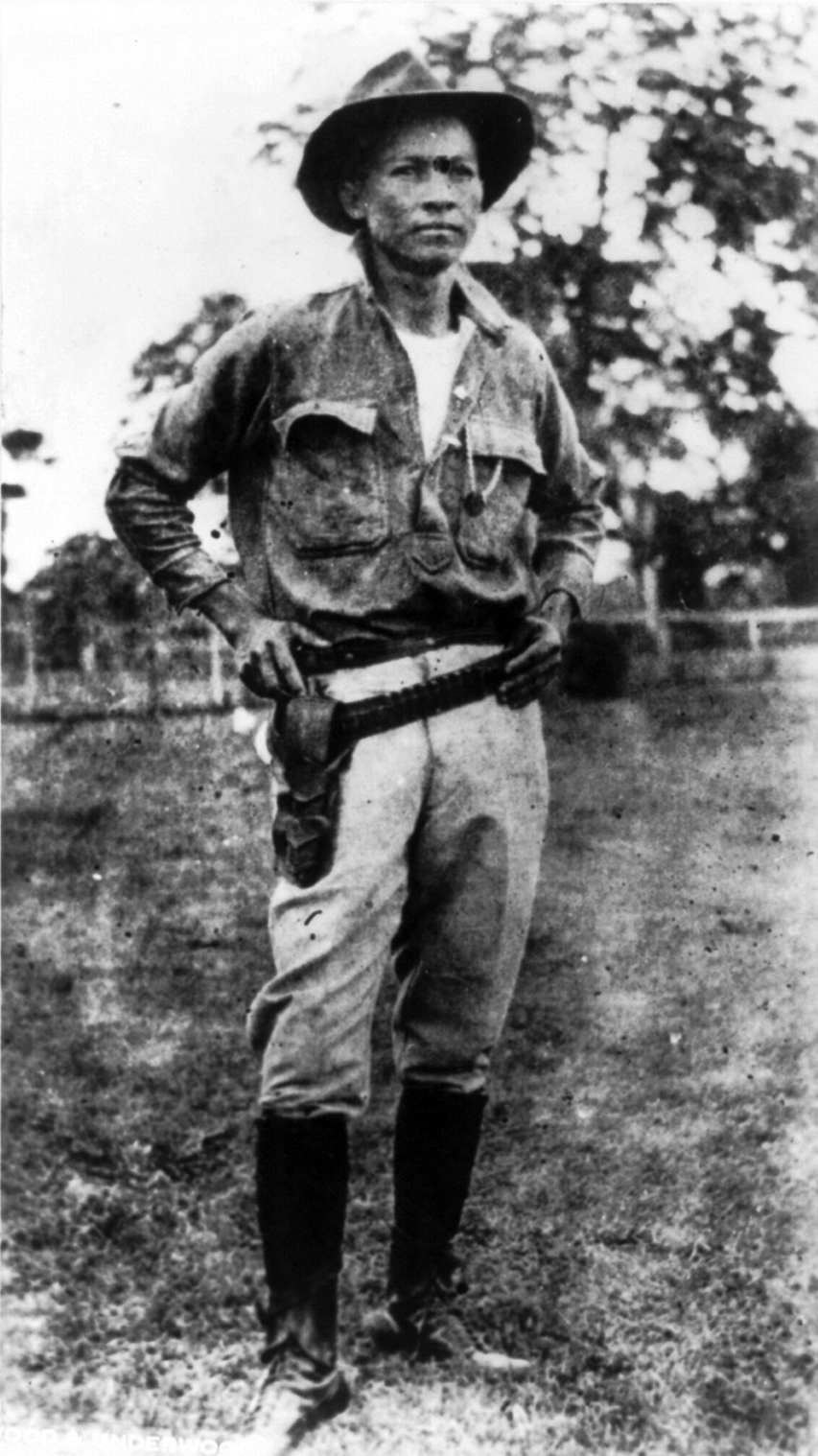
Augusto César Sandino (1895–1934) Jane Ivanov Sandanski (1872–1915)

Reading the biography of a certain historical character (Hristo Zarezankov / Христо Зарезанков) at a Macedonian web site, I was a bit intrigued by his being introduced as a "Macedonian revolutionary, Sandinista, and anarcho-socialist" (македонски револуционер, сандинист и анархосоцијалист). Considering the character's years of life (1890–1938), political inclinations, and, overall, his quite eventful life, one could certainly imagine Mr. Zarezankov sailing to Central America and joining the fighters of Augusto César Sandino - or maybe trying to follow the General's anti-imperialist ideas in the Balkans.

It turns out, however, that, in Macedonian at least, сандинист (Sandinist[a]) is not an uncommon typo for санданист (Sandanist[a]). (In English, of course, people are prone to misspell the other way around).

Like the Sandinistas, the Sandanists, too, were named after an assassinated charismatic leader, Jane Sandanski, fighting against the oppression by a great power (in his case, the Ottomans). I won't try to summarize here the complexities and controversies of his politics, but the career of the Pirinskiot Tsar ("The Czar of the Pirin") is a good illustration of the concept of "Balkanization". After Macedonia was liberated from the Turks in 1912 and divided by the liberator countries (who had to go to war between each other to accomplish the said division) in 1913, Sandanski was assassinated -- supposedly, with a tacit (covert) approval of the Bulgarian Czar Ferdinand, who then sent a wreath to his funeral.

2014-05-07

Nofuz

I encountered an interesting word in Krste Misirkov's famous little book, "Za Makedonskite Rabotite" (1903). One of Misirkov's main ideas at the time was that Macedonians would be better off as loyal subjects of His Imperial Majesty the [Ottoman] Sultan than in a united Macedonia (made into an autonomous province of the Ottoman Empire) than as citizens of several Christian countries that would divide Macedonia in case of a victorious anti-Turkish rebellion or war (which, of course, happened in 1912-13). Among the good things which, in his view, Turks could do to become better masters of their Macedonian subjects would be "entering the name 'Macedonian' into the nofuzes and other official documents of people of Slavic origin from Macedonia" (внесуаiн'е во нофузите и друзите официiални документи на лица от словенцки произлез од Македониiа името „македонец"). So apparently nofuz (нофуз) was some kind of identity document that Ottoman subjects had to use; but what exactly was it, and what's the origin of the word?

A Google Books search shows a few other uses of the term in the Bulgarian/Macedonian literature of the period describing the Ottoman Macedonia of the day. Vasil Kunchov explains (Macedonia, 1900, page 135):

At the birth of every child, a certificate called "nofuz" is issued by the government, via the ecclesiastiscal authorities. In it, the child's sex, name, birth date, birth place, and the names of the parents are recorded. The nofuz certificate is needed by every Turkish subject, because without it one cannot travel within the country or receive a passport to travel outside of it; without it, ecclesiastical authorities must not issue a marriage license. This being the case, everywhere in Turkey there are plenty of men and women without nofuz certificates.
... Нофузното свидетелство е нужно на всеки турски подданикъ, ...

And here's a good article in English on those IDs: Ottoman Identity Card, by Chris Gratien, with a few photographs of what those documents looked like. It turns out that in Turkish they were called nüfus tezkeresi, where nüfus by itself means, apparently, "population". It seems that in the Slavic language of the day the colloquial name for the document became shortened simply to nofuz.

2014-04-28

Legislation related to cucumbers

Commission Regulation (EEC) No 1677/88 of 15 June 1988 laying down quality standards for cucumbers. To the readers of this blog it may be interesting, I suppose, primarily from the philological point of view. As fits a EU document, over the 26 years since the quality standards for cucumbers have been laid down, they have been translated into 20-plus national languages of the European Union, all the translations being available at the URL above. (The Irish Gaelic and Croatian are disappointing omissions; I suppose Croatian readers will have to make do with the Slovenian, Slovak, and Bulgarian translations).

By comparing the translations, one can note to see the "Great Cucumber Divide", a line running from the North Sea to the Adriatic and dividing the continent in half. Almost everywhere in the Eastern, Northern, and Central Europe, the word for "cucumber" is a derivative of the Greek αγγούρια ("unripe"; all examples here and below are in plural, and in an oblique case); cf. German Gurken, Swedish gurka (similarly in other Germanic languages, except for English), Czech okurky, Slovak uhorky (similarly elsewhere in West and East Slavic), Latvian gurķiem, Finnish kurkkujen, etc.

Admittedly there is a strange non-αγγούρια island in the Balkans, with the Bulgarian краставици and obviously related Romanian castraveți. (Outside of the EU directive, we also find the same word in Albanian (kastravecë), Maceodnian, and Serbian/Croatian). So in this case the Balkan Sprachbund has a common word, but it is not the same Greek word that's common throughout half the Europe!

The south-western half of Europe is much less homogeneous. Spanish and Portuguese have pepinos, which comes, ultimately, from the Greek πέπων "melon" (as does the English pumpkin).

The English cucumber, via the French concombre is said to be derived from the Latin cucumis. In Italian, this word survived too, as cocomero, but there it is more likely to mean "watermelon" than "cucumber"; the apparently more standard Italisn word for "cucumber" preferred by the EU bureaucrats id cetriolo, which also happens to be a Greek loanword - with the original Greek meaning "citron"!

The Salahor has arrived


A classic of the Macedonian and Bulgarian poetry, Grigor Prlichev's In the Year 1762 (В 1762-ро лето) tells the (fictionalized) story of the abolition of the Archbishopric of Ohrid (which, according to most sources, actually, happened in 1767). Written in 1872, the poen has practically become a folk song in Macedonia, at least judging by the number and variety of its renditions available on Youtube.

The language of the poem, although obviously archaized for the effect, is, generally, quite easy to understand based on the modern Macedonian plus some knowledge of Church Slavonic. There is, however, one unusual word in it. In the first sentence of the poem, "a salaor arrived to Ohrid from Constantinople" (В Охрида од Цариграда дошел Салаор). The salaor then stood in front of the Patrik of Orhid (literally, "Patriarch", but in the Macedonian context, the Archbishop of Orhid - the spiritual leader of the Balkan Slavs), and delivered to him the Sultan's order, dismissing the Patrik and abolishing his office.

Now, who is a salaor? The word salaor (салаор) does not look like a typical Slavic word, so, considering the context, it can be a Turkish loanword. However, it does not appear in standard Bulgarian or Macedonian dictionaries or texts (other than Prlichev's poem). Now, one of characteristic features of Macedonian (in fact, one of its main differences from standard Bulgarian) is that Macedonian often drops the consonant h or, in intervocalic position, v, where it appears in Bulgarian. So one also needs to check salahor (салахор) and salavor (салавор) - which, however, don't appear in Bulgarian or Macedonian (or even Turkish) dictionaries or texts either. It does appear as a surname, however - Salahor in Canada and the US, Salavor in Ukraine... and Salahor is apparently attested as a Romanian word. But what does (did) it mean in Bulgarian?

The Bulgarian etymological dictionary to the rescue! (Macedonian, from the Bulgarian scholar's point of view - rarely shared by anyone outside of Bulgaria - is merely a dialect of Bulgarian, so any Bulgarian dictionary striving to comprehensively cover dialect words should include most of Macedonian words as well). The BER volumes have been appearing at the average rate of two per decade since 1971; presently, its authors have reached letter T (volume 7, 2010). And yes, volume 6 (published 2002) has a detailed article (page 443) on salahor (салахор), with spelling varieties salaor and salavor. This, indeed, is an obsolete word; its main meaning being given as "people driven ''en masse'' to do unpaid labor" (хора, карани вкупом на безплатна работа), i.e. corvée workers. Additional meanings attested in certain dialect are "laborers" (трудоваци) and "a wanderer" (скитник). The indicated etymology, however, indicates a rather different original meaning: Turkish salahor, from Turkish Turkish silâhşor, "an armed fighter; a musketeer", which itself is a loanword from Persian (selāḥšūr, which in its turn is constructed from Arabic roots.

According to the same dictionary, the same Turkish word, besides Bulgarian, entered other Balkan languages as well. Indeed, a Romanian dictionary explains salahór as an "unskilled day laborer, esp. on road or building construction projects", or (historically) "a peasant who, instead of paying taxes, would have to work on fortress repair, road maintenance and other heavy work". In Serbo-Croatian, where the word could be variously spelled as salahor, sarahor, saraor, seraor, the purported meaning would be that of a soldier whose duties involve guarding a fortress (rather than, say, going on field campaigns); it also exists there as more authentically Turkish silahšor, and refers to a member of the palace guard of the Ottoman Sultan.

A slight variation on the duties of a Salahor at the Sultan's court appears in a 19th century source, Travels in Albania and Other Provinces of Turkey in 1809 & 1810 by Rt. Hon. Lord Broughton (page 239), where "Squires of the Stable" (Salahor) are listed among the officials handling Sultan's horses.

To conclude, after reading all these definitions, we still don't know whom exactly Prlichev had in mind when he was writing about a salaor. Simply a "traveler" (скитник) would not make to much sense to refer to a person who has brought the official Sultan's order, and presumably was a person in a position of some responsibility. But a "day laborer" would make even less sense. A fortress guard, or even a "squire of the stable", is not the same as an imperial courier either; perhaps there was another shift in meaning somewhere... We do, however, now have a better idea of where and how the surname Salahor (or Salavor / Salaor) originated.

2011-04-30

Call it a spade

With the sacred turtle of the Lake of the Returned Sword making news lately, the question of its species identification got some attention as well. While some Vietnamese researchers believe that the creature belongs to Vietnam's own unique species, Rafetus leloii (named after the emperor to whom the turtle lent the sword), the mainstream view is that it's in the same species, Rafetus swinhoei, or the Giant Yangtze Softshell Turtle, with the similarly endangered turtles of the Yangtze basin in China.

The swinhoei epithet in the species' binomial name comes from the name of Robert Swinhoe, a British consul in China and an avid naturalist, who sent a specimen of this turtle from Shanghai to John Edward Gray, the top turtle expert at the British Museum. The latter, accordingly, named the new species Oscaria swinhoei. The Oscaria in the binomial species name was replaced with the Rafetus at some later point, when zoologists reclassified the species to the Rafetus genus. But what does the genus name, Rafetus, actually mean?

Although Latin in appearance, the etymology of the name Rafetus was somewhat baffling to the volunteer Latinists at Yahoo Answers, when somebody raised that question there a few years ago. So one has to go to the primary sources. Before the Yangtze turtle was re-classified as a Rafetus, the Rafetus genus was "monospecific", i.e. contained only one species, the Euphrates Softshell Turtle, Rafetus euphraticus. While the Euphrates Turtle had been known to Western science since 1797, it got its present Latin name, only in 1864, from the same Gray who, based on his analysis of its skeleton in the British Museum, decided to establish a separate genus for it. Somewhat surprisingly to me, Gray's paper - or his earlier monographs on the related subjects - did not explain the meaning of the Latin name for this genus, or, for that matter, for any other genus he was describing. (Were such things supposed to be transparent to the zoologists of the day? Who knows...) In any event, the name of the genus Rafetus that Gray established in 1864 was clearly based on what he reported as the species earlier names, viz. Testudo rafeht and, later, Trionyx rafeht. (Testudo was the original, Linneus', genus for all turtles; Trionyx, a later established genus for all soft-shell turtles). Gray would also use "the rafeht" as the species' supposed common name.

But... what did "rafeht" mean? For this, we have to go to what is the real primary source, i.e. the Voyage of Guillome-Antoine Olivier. Olivier was the French naturalist who avoided the unpleasant fate of Lavoisier by being sent, soon after the French Revolution, as an envoy to the Ottoman Empire and Persia. In 1797, when crossing the Euphrates on his way back to France, he shot a large turtle, which, he said, the Arabs called rafcht. (As he wrote in French, his ch must stand for a sound more like the English sh). So the species became known as Testudo rafcht, with "rafcht" actually used as a "common name" in some publications of the time. Gray apparently misread "rafcht" as "rafet"... which I would not find entirely surprising.

And what does rafcht (rafšt, in a more standard Arabic transcription) mean? Arabic dictionaries don't have such a word, but they do have rafš ( رفش ) , which means "spade" or "shovel". And, apparently, ar-rafš (الرفش), i.e. "the spade/shovel" is still used as the common name of this creature, according to e.g. to this leaflet of Wildlife Middle East (which also has an English version). So we've got here, ultimately, a (Contemporary) Latin word of Arabic origin!


Well, the shell does look like a shovel! (Photo by Reqê Firatê)


P.S. Any actual Arabic speakers are welcome to comment!