2011-09-18

The world's railways, all on one map

Bill Rankin, of Yale University, has a wonderful map of world's railways (2008) on his site http://www.radicalcartography.net , with some thoughtful comments on how it reflects on the economic history of the world's nations.

His site does not seem to provide a space for readers to comment, so I would like to do it here.

First of all, a good way to describe this map would be not simply as a map of world's railroads, but rather as a map of (almost) all railroads, of any type, that ever existed prior to ca. 1990.

There are two reasons for this situation.

(1) First, a map like this brings to the fore a major issue for creating any railway map: the adequacy of sources. It seems that sometimes it is not easy for a newly-built railway to get to maps (especially published in other countries); but it is even harder for a dismantled railway to disappear from maps! The most prominent example visible of Rankin's map is perhaps the Newfoundland Railway, closed for good in 1990, but still gracing many world maps with its presence. Less visible is the Kettle Valley Railway southern British Columbia. Its western section, abandoned in the early 1960s, is gone from most maps (including Rankin's), but the eastern section, physically dismantled in the early 1990s, keeps living in the world of maps, including this one.

As a more interesting example, a good section of Stalin's pet project, the Salekhard–Igarka Railway in the north of western Siberia - namely, an east-west section across the northern part of Tyumen Region - actually saw trial service for a short time before the incomplete rail line was abandoned in 1953, and some western maps at the time showed the western half of this Arctic railway as operational. (I own a 1950s-vintage Rand McNally atlas which does so). Although that railway did not take root in the world of cartography, it somehow made its way into Rankin's masterpiece - presumably because the author tried to work with the most comprehensive sources available.

On the other hand, some of the more recently built railways - e.g., the China-Kazakhstan connection and the Turkmenistan-Iran connection, both activated in the early 1990s - aren't on the map, nor is the Kashgar railway in China's Xinjiang (also built in the 1990s; and it now has branches that only became operational after 2008...)

A peat railway, near Esterwegen, Germany

(2) Second, more detailed maps try to distinguish different types of railways, but in this comprehensive map it apparently was not possible. But a distinction we must make. For example, anyone used to looking at general-purpose maps of Russia and China can't but be amazed at some small but extra-dense clusters of rail lines which, according to Rankin's map, exist in the north-east of European Russia (roughly, the region between Arkhangelsk, Nizhny Novgorod (Gorkiy), and Yekaterinburg (Sverdlovsk), and in China's Heilongjiang and Jilin provinces (the northeastern part of what we used to call Manchuria). There is no mystery here, however: these are so-called logging railways (and, on rare occasions, peat railways). They are very different from standard, permanent, railways operating in these countries. A logging railway is typically a narrow-gauge railway, laid at the minimal cost, and only used to move logs from the woodlots to a mainline railway station or a sawmill. I understand that many sections of such railways are only used for a few years, and then, once that particular section of the forest has been cut, moved to a new location. A general-purpose Soviet or Russian map would never show them, but a topo map would... giving one probably an exaggerated idea of an area's rail density, as in reality many of the lines shown would not be actually operational anymore (see (1), above). Anyway, by now, I suspect, most of these logging railway live on cartographers' desks, as the timber industry has mostly switched to using trucks.


A sugar cane railway, near Proserpine, Queensland, Australia

A somewhat similar class of railways are sugar-cane railways, which apparently are responsible for the extraordinary visible density of railways in Cuba, Mauritius, parts of Taiwan, and even a rail line in Fiji. I am not sure if the map shows the sugar railways of Queensland - I think if it did, there would be a more dense network there. The sugar railways are, like forest railways, narrow gauge (sometimes, very narrow gauge), and only used to move a particular type of cargo. Unlike many forest railways, sugar railways are permanent, even if used for only a few weeks in a year, to transport cut canes to the nearby sugar mill. Their existence is made economical by the fact that sugar cane's yield, in tons per hectare, are much higher than those of most other crops grown on similarly large scales. I know that at least some such systems in Queensland are still very much in operation, and I've seen tracks for one of them in Fiji (no idea if they are ever in use, though), but I don't know about other countries.

(3) Dr. Ranking contrasts the American (meaning, here, US, Canada, and Argentina) railway network to systems elsewhere, by justly noting that "In the Americas, rail was the primary route by which crops reached global markets, and railways and settlement often went hand in hand." This is true in a sense - the remarkable dense networks covering the fairly sparsely populated agricultural regions of the Great Plains of the US and western Canada, central Argentina, as well as the grain-growing areas of Australia's Victoria and Western Australia are quite remarkable. But one should not forget, at the same, how extraordinary and short-lived phenomenon these networks were. They were, basically, brought to life by the particular situation that obtained during several decades in the second half of the 19th century through the early 20th century: the railway technology was much more efficient for moving grain and other cargoes overland than any other option available (which, in those areas mostly meant a horse and a cart).

It seems that soon after trucks became widely available and the governments subsidized highway construction, the less-used 50% (sometimes 90%) of this unique rail network became abandoned. The system reverted to a form more "sustainable" in the truck-and-road based economy: railways connecting major transportation hubs, with trucks moving grain and containers to the surviving high-volume stations. If one were to wipe all disused railways from the US/Canada/Argentina/Australia maps, and add all new railways that have been built over the last several decades in countries like China or Iran, I feel that the overall density of the operational railways today's in North America won't be that difficult from the comparable population-density regions of eastern Europe and Asia (Russia, Turkey, Iran, north-western China). And it will be only natural for high-population-densities regions in India and China to soon surpass the US and Canada with respect to the railway network density.

In a sense, I wish very much that all those rail lines that have been abandoned or converted to bike trails became active railways again, and all kinds of factories, warehouses, and other businesses - even post offices - moved back to the trackside districts, where they could ship and receive their freight directly by rail... but this isn't going to happen unless a very radical change in the different modes' transportation costs occurs.

As a comparison, in the late-19th century Russian Empire, the need to carry export grain to the sea ports was also a major stimulus for the railway construction boom. But the country - not even its most fertile areas in south-western Russia and Ukraine - never acquired as dense a system as Iowa or Saskatchewan had for a few decades in the early 20th century. Partly this indeed must have had to do with the availability of capital and the general level of the development of the national economy, partly with the simple transportation economics: with lower crop yields per acre, and much higher local population densities, I suspect that the net amount of grain to be exported from any 100-square-miles region of Ukraine or the Saratov Governorate was rather smaller than from a similarly sized piece of Iowa. As a result, they have not had to abandon all that much of railway trackage, except for in a few areas where the construction was moved by "mining or manufacturing", as Dr. Rankin says, and where that mining (or, less commonly, manufacturing) is gone. Among the lines still shown on the map, an example of this is a large part of the branch that goes east from Apatity and Kirovsk in Russia's Kola Peninsula.

2011-07-08

"Curious Land: Jesuit Accommodation and the Origins of Sinology" by David E. Mungello

(This is a slightly expanded version of my book review on Amazon.com)

I read David E. Mungello's Curious land: Jesuit accommodation and the origins of Sinology a few years ago, almost by accident. The book sat on a library table, waiting for reshelving, and the cover looked sort of ... curious. I wondered for a short while if this is just one of many lightweight popular-history books that, basically, regurgitate the same well-known facts in different order. But once I opened the volume, I saw that it was full of names and events I had not heard about. So I checked it out, just to see if it will be interesting enough to read throughout. As it turned out, not only was it interesting enough - the subject area it discussed was just so interesting, that I have read another dozen books on related topics since then!

There are many good and not so good books about contacts between Europe and China, but, as I said, it seems that many of them give you a pretty superficial review of the same basic points, spiced with a few more or less familiar anecdotes. "Curious Land" is very different. For one, D.E. Mungello strictly focuses on the subject matter (Jesuits in China, and their European contacts) and the time period (from the Jesuits' arrival to China, i.e. ca. 1580, until 1700). Which means that many other stories - such as the Portuguese' arrival to Chinese coast and their early exploits, or the Spanish Dominican and Augustinian friars' attempts to bring gospel to China are not covered in this book; nor is any of the post-1700 history. (If you are interested in any of this, The Great Encounter of China and the West, 1500-1800 by the same author can be recommended for a much more concise and "non-specialist" overview of the "big picture" and for more literature pointers. C.R. Boxer's works, and in particular his South China in the Sixteenth Century (1550-1575) - an annotated translation of the narratives of Galeote Pereira, Gaspar Da Cruz, and Martin De Rada - are perhaps the best coverage of the early Portuguese and Spanish contacts; this last book would give you a good idea of what the first Jesuits to work inside the "mainland" China, Michele Ruggieri and Matteo Ricci, may have read about the country on their way there).

More importantly, having delimited his topic so precisely, Dr. Mungello manages to provide a really in-depth study of what the Jesuits saw in China, how they understood it, how they presented it to the European audience, and what was the reaction of Europe's scholars. He explains in detail the "accommodation" policy developed by the Jesuit China Mission's founding father, Matteo Ricci, and promoted by several generations of his successors. The policy tried to make Christianity acceptable to Ming China's literati by declaring that Confucianism and ancestor veneration are, in principle, compatible with Christian faith, because they really are just a system of moral and political beliefs (fully compatible with Christianity) and civil rites (which, with certain reservations, can be accommodated in a Christian's life as well). This truly Jesuitical (hey, I have chance to use this word!) view of the Chinese world affected of course both what Jesuits said and did in China (e.g., not talking too much about Crucifixion and Resurrection until a prospective convert was ready) and what they said about China in Europe. The "accommodationist" ideology (and its later, Qing-era development, known as the "Figurism") may have been quite successful in making Christianity a truly widespread religion in China, but it came under attack from influential Christian purists in Europe, and was eventually disallowed by the Pope, drawing the period of flourishing Jesuit activity in China to an end.

Nonetheless, over a century of Jesuits' study of China, its language, philosophy, history and culture resulted in the creation of a tremendous intellectual capital, quite influential with a number of European thinkers of the period, from Leibniz to a group of rather obscure scholars in the Prussian capital Berlin. While the story of the latter group may be just a vignette in the overall story of the Sino-European intellectual contact, it certainly is worth telling, and Dr. Mungello's does it very well too.

2011-06-21

A visit to Hindustan (and beyond)


One Sunday morning, I went to Hindustan. Not a lot of Hindus of Muslims were to be seen, but the Pentecost service was at full swing at the local Christian church. Alas, I did not have proper clothes to join...


Typical landscape nearby: corn and day lilies. (The second most common crop there is corn).

A girl demonstrates a very friendly box turtle, which had recently just walked in into the family home's garage. The creatures apparently liked to be petted, and would not pull in its head and legs, as turtles are apt to do


And, a couple hours later, I am in Brooklyn already.

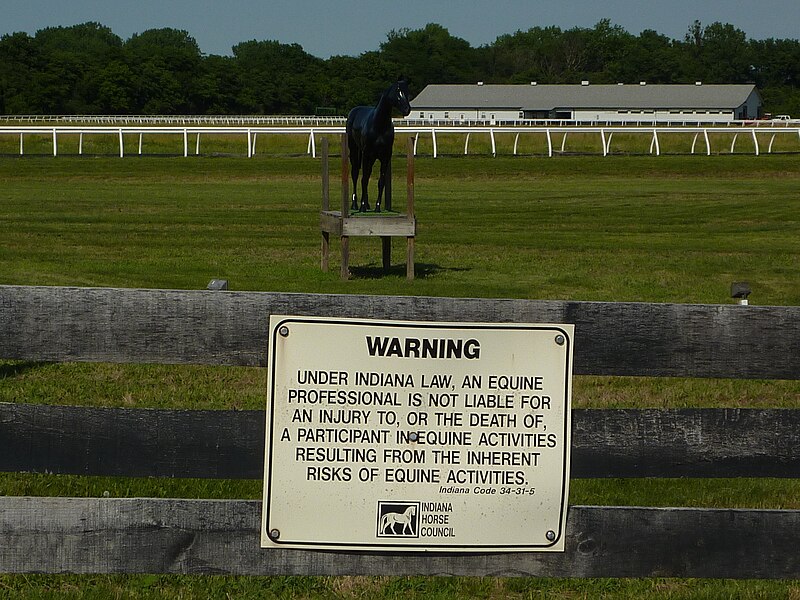
Equine activities, anyone?


Well, maybe it's good that I did not go by train...

2011-05-27

Simply a marvelous picture...

(A Great Blue Heron caught a small Common Snapping Turtle. Photo by jayhawk6 on Flickr.com, via Wikimedia Commons)

Almost a real-life illustration for The Fight Between the Snipe and the Clam.

2011-05-24

Edward Kajdański's take on the sumxu

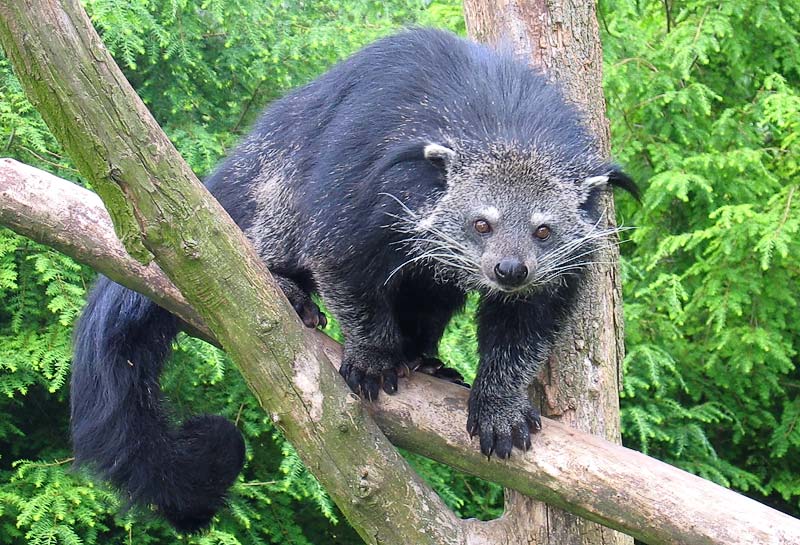
Binturong, a.k.a. the Asian Bearcat - one of SE Asia's civet-like animals. (Photo by Tassilo Rau)

I wrote a while back about the sumxu, a strange creatures described by the 17th-century Polish Jesuit Michael Boym in his Flora Sinensis (1656). Sumxu is Boym's transcription of the Chinese 松鼠 (songshu, in the modern Pinyin transcription), which means "squirrel" (literally, "pine rat"), and Boym's picture is so labeled in both Chinese characters and in transcription, and the creature depicted certainly looks squirrel-like. However, Boym's text says that people kept those sumxu as expensive pets, valued for their ability to hunt mice - which, of course, is a rather strange thing for a real squirrel to do. The sumxu became popularized in the European imagination by Athanasius Kircher, who in China illustrata (1667) compared it to a cat... and the story lived in European books for the next 200 years. A number of people tried to solve the riddle of the sumxu; in particular, it has been suggested by some that due to some confusion on Boym's or his informants' part, the sumxu (松鼠, "squirrel") label got attached to a different animal, from the mustelid family, such as the yellow-throated marten. Here's the promised update on the work of one researcher who spent a fair amount of effort tackling the sumxu mystery. Polish diplomat and writer Edward Kajdański published three books (and a number of articles) on Michael Boym. The last of them, Michał Boym – Ambasador Państwa Środka ("Michael Boym, an Ambassador of the Middle Kingdom"; 1999; also available in a Chinese translation by Zhang Zhenhui (张振辉) "中国的使臣卜弥格", 2001) has a chapter on Flora Sinensis, with a few pages on the mysterious green winged turtle and the mice-hunting sumxu. For some reason, Kajdański keeps referring to the creature as the "sumxu cat" ("kot sumxu"), although Boym himself did not mention cats at all, and Kircher merely compared the sumxu to a cat. Kajdański has a number of interesting ideas about the sumxu, but, to be honest, I can't quite make sense of how he puts them together. Kajdański somehow links the origin of Boym's famous sumxu-and-turtle picture with the Polish Jesuit's "fascination" with the travels of Marco Polo. Marco Polo in his Travels talks about the musk deer, the mysterious (for Europeans) source of the precious musk - and says somewhere (in some editions of his Travels, at any rate) that the creature was cat-sized. Somehow, through a logical connection that I don't quite understand, the Polish researcher then infers that what Boym really had in mind when drawing the sumxu was, too, a musk-producing creature, namely, something from the civet family. Kajdański even says that he saw a matching creature - looking sort of in between the Siberian weasel and the small Indian civet - in the Natural History Museum of Kunming, but, alas, was not able to find out its Latin name. The next thing Kajdański does (and I can't quite figure the connection to it either), is to suggest that sumxu/松鼠 (Pinyin: songshu; meaning "squuirrel", or, literally "pine mouse/rat") with the "snake-eating mouse", 食蛇鼠 (Pinying: shi-she shu; likely Boym-era transcription, xixexu, though Kajdański suggests shuxexu) - a creature mentioned in the famous Chinese compendium of materia medica, Ben Cao Gang Mu. Boym indeed must have been well familiar with Ben Cao, as he wrote extensively on Chinese medicine; and such a "snake-eating mouse" (or "rat", if you wish) is indeed mentioned in that work. However, I think it rather unlikely that Boym would choose that creature for including into his fairly small work - really, a selection of the most interesting and important plants and creatures of East Asia for the erudite European audience. After all, Ben Cao only has a couple lines on the "snake-eating mouse". It says that, according to the Book of Tang, such a "snake-eating mouse", with a pointed mouth and a red tail, was sent as tribute by the country of Jibinguo (罽賓國/罽宾国; Kapisa (?) in Northern India), but noone has heard of such a thing lately (i.e., in the 16th century, when Ben Cao was compiled). (I suppose what the Indians actually sent to the Tang Emperor was a mongoose of some kind). Kajdański says that according to the old pharmaceutical works (presumably, the same BCGM), the creature Boym had in mind (not entirely clear to me whether he refers to the same shi-she shu or the civet-like creature that he saw in the museum... I guess he identifies the two) was indeed valued in old China, and could be kept (on a leash, presumably) with a silver collar. However, he says that what the creature was valued for was not its mice-hunting prowess, but it's anti-snake powers. First, the creature was said to be able to locate venomous snake by their scent; second, the creatures own musky smell would repel such venomous snakes from the place where it was kept; third (which Ben Cao indeed mentions), if the creature's owner still had a misfortune of being bitten by a snake, he only had to have his shi-she shu urinate on the bite wound, and it would save him from the venom! This all sounds like a fascinating legend indeed (certainly goes way beyond Kipling's Rikki-Tikki-Tavi!) - just the stuff Kircher would love. If Boym really had such a thing in mind - how come he did not pass the story to Kircher, instead of just telling him about a comparatively boring mouse-hunter?

2011-05-16

Bus to Sydney, anyone?

The photo, taken last January, shows the interior of a two-level bus in Wuhan. The sign says, "武汉公交欢迎您" ("Wuhan Public Transportation welcomes you"), and - as I have just noticed - displays a likeness of a building remarkable similar to Sydney Opera House. Does Wuhan bus system plan to run a route all the way to Sydney? Or is the city preparing a replica of the theater, on a suitably shaped peninsula somewhere in the East Lake? (Incidentally, this is probably bus no. 536, the one that takes quite a bit over an hour to cross the city from the Hankou Station to the eastern edge of Wuchang).

2011-05-13

Protecting Mr. Bezos

Looking through Amazon.com's Year 2011 Proxy Statement (page 19), I found the "2010 Summary Compensation Table":
Name And Principal Position Year Salary Stock Awards(1)All Other Compensation Total
Jeffrey P. Bezos, Chief Executive Officer 2010 $ 81,840 $ — $1,600,000(2) $1,681,840
2009 81,840 1,700,000 1,781,840
2008 81,840 1,200,000 1,281,840
Thomas J. Szkutak, SVP and Chief Financial Officer 2010 160,000 6,465,300 3,200(3) 6,628,500
2009 160,000 3,200 163,200
2008 157,500 7,491,000 3,150 7,651,650
... etc... (similar numbers for three more SVPs) ... etc ...
Nothing much unusual about these data. Publicly traded companies are required to publish this information. The executives' salary does not need to be high (in fact, Mr. Bezos' is actually lower than many rank-and-file engineers in the company!), as they get compensated by sizable stock awards instead. And Mr. Bezos personally does not even need the stock grants, as he owns almost 20% of the company anyway. What attracted my attention was note (2) in the "All Other Compensation" column:
(3) Represents the approximate aggregate incremental cost to Amazon.com of security arrangements for Mr. Bezos in addition to security arrangements provided at business facilities and for business travel. We believe that all company-incurred security costs are reasonable and necessary and for the company’s benefit.
This, per se, is probably nothing that unusual either: major companies lead by celebrity billionaire CEOs such as Mr. Bezos or Mr. Gates have probably always spent a hefty chunk on "extra security", just in case. It is interesting, however, that now (since when? I never knew!) they have to report these costs, even if approximate, as part of the top executive's "compensation" on the company's proxy statement. I suppose this is just a SEC requirement, and not an implication that IRS wants to consider the cost of extra security as part of the CEO's taxable income! Anyway, now that we're given the number - USD 1.2 to 1.7 million - it can just as well enter the public record. This probably compares to the budget of a small-town police department (well, in a really small town, that is...), with some left for car payments on a nice armored car, I guess. Of course, this is probably nothing compared to what the Secret Service protection for the government leaders costs.

2011-04-30

Call it a spade

With the sacred turtle of the Lake of the Returned Sword making news lately, the question of its species identification got some attention as well. While some Vietnamese researchers believe that the creature belongs to Vietnam's own unique species, Rafetus leloii (named after the emperor to whom the turtle lent the sword), the mainstream view is that it's in the same species, Rafetus swinhoei, or the Giant Yangtze Softshell Turtle, with the similarly endangered turtles of the Yangtze basin in China.

The swinhoei epithet in the species' binomial name comes from the name of Robert Swinhoe, a British consul in China and an avid naturalist, who sent a specimen of this turtle from Shanghai to John Edward Gray, the top turtle expert at the British Museum. The latter, accordingly, named the new species Oscaria swinhoei. The Oscaria in the binomial species name was replaced with the Rafetus at some later point, when zoologists reclassified the species to the Rafetus genus. But what does the genus name, Rafetus, actually mean?

Although Latin in appearance, the etymology of the name Rafetus was somewhat baffling to the volunteer Latinists at Yahoo Answers, when somebody raised that question there a few years ago. So one has to go to the primary sources. Before the Yangtze turtle was re-classified as a Rafetus, the Rafetus genus was "monospecific", i.e. contained only one species, the Euphrates Softshell Turtle, Rafetus euphraticus. While the Euphrates Turtle had been known to Western science since 1797, it got its present Latin name, only in 1864, from the same Gray who, based on his analysis of its skeleton in the British Museum, decided to establish a separate genus for it. Somewhat surprisingly to me, Gray's paper - or his earlier monographs on the related subjects - did not explain the meaning of the Latin name for this genus, or, for that matter, for any other genus he was describing. (Were such things supposed to be transparent to the zoologists of the day? Who knows...) In any event, the name of the genus Rafetus that Gray established in 1864 was clearly based on what he reported as the species earlier names, viz. Testudo rafeht and, later, Trionyx rafeht. (Testudo was the original, Linneus', genus for all turtles; Trionyx, a later established genus for all soft-shell turtles). Gray would also use "the rafeht" as the species' supposed common name.

But... what did "rafeht" mean? For this, we have to go to what is the real primary source, i.e. the Voyage of Guillome-Antoine Olivier. Olivier was the French naturalist who avoided the unpleasant fate of Lavoisier by being sent, soon after the French Revolution, as an envoy to the Ottoman Empire and Persia. In 1797, when crossing the Euphrates on his way back to France, he shot a large turtle, which, he said, the Arabs called rafcht. (As he wrote in French, his ch must stand for a sound more like the English sh). So the species became known as Testudo rafcht, with "rafcht" actually used as a "common name" in some publications of the time. Gray apparently misread "rafcht" as "rafet"... which I would not find entirely surprising.

And what does rafcht (rafšt, in a more standard Arabic transcription) mean? Arabic dictionaries don't have such a word, but they do have rafš ( رفش ) , which means "spade" or "shovel". And, apparently, ar-rafš (الرفش), i.e. "the spade/shovel" is still used as the common name of this creature, according to e.g. to this leaflet of Wildlife Middle East (which also has an English version). So we've got here, ultimately, a (Contemporary) Latin word of Arabic origin!


Well, the shell does look like a shovel! (Photo by Reqê Firatê)


P.S. Any actual Arabic speakers are welcome to comment!

2011-04-23

Polish Jesuit's squirrel

Sum Xu (松鼠)
Sum Xu animal apud Sinas reperitur, flavi & nigri coloris est, pulcherimi aspectus. Cicurant illiud Sinenses & collum argento exornant, mures egregiè venatur. Sæpe venit septem & novem scudis. ....
Lo Meo Quey (绿毛龟) - Vindium (viridium?) alarum Testudo
Alatæ testudines in aliquibus provinciis Sinarum & præcipuè in Ho-van inveniuntur virides, & interdum cæruleas adiunctas pedibus habet alas, & gradum tardissimum quàm volatu aut potiùs quodam saltu extensis pedum alis compensat. Pedes alati hujusmodi testudinum in pretio sunt apud Sinas etiam ob raritatem. ...

(Michael Boym, Flora Sinensis, 1656

While looking for later references to some of the creatures mentioned in Boym's work, I found an interesting article by Sarah Hartwell about a strange breed of cats that, according to many European authorities of the 18-19th centuries, supposedly existed in China - but was not anywhere to be found when people actually went looking for it. This certainly called for a day in a rare book library...

Polish Jesuit's squirrel

The Jesuit missionaries who operated in China between the late 16th and early 17th century were a an outstanding group, but even against this background the story of Michael (Michał) Boym (ca. 1612–1659) is remarkable. Born in Lwów (a.k.a Lemberg, Lvov, Lviv), he left his native Poland to join the Jesuits, and was posted to China. He happened to arrive to China right around the time of the Manchu invasion and the fall of the Ming Dynasty. Fifty years earlier, the Wanli Emperor never deigned to meet Matteo Ricci and Diego Pantoya in person (and when given the portrait of the priests, exclaimed "Ah, they are Hui-Hui!"). Now, when Beijing and Nanjing both fell to the Manchus, Koffler (another Jesuit, an Austrian) and Boym were able to enter the inner circle of the court of the Yongli Emperor (a grandson of Wanli), who was still resisting the Manchus from the empire's southwestern corner, and to baptize several members of the royal family. As the Ming's situation became increasingly precarious, Empress Elena sent Boym to Europe with a plea for help from the Pope. The Portuguese (who controlled Jesuit's operations in China and elsewhere in Asia) and the Jesuit leadership, however, were not all that enthusiastic about supporting the Ming's nearly-lost cause, so getting to Europe became yet another adventure for Boym and his traveling companion, a Chinese Christian named Andrew Zheng.

Engaged as he was with politics and the missionary business, Boym managed to write a few important books and articles, only some of which were published at the time. One of the best known is his delightful Flora Sinensis (1656). The album actually covered both flora and fauna, and not only of China. One of the most interesting pictures there was the one showing two creatures: Sum Xu (松鼠) and Lo Meo Quey (绿毛龟).

松鼠 is transcribed songshu in the modern Chinese transcription (Hanyu Pinyin), and is the usual Chinese word for "squirrel". (The literal meaning is "pine rat".) ''Sum Xu'' would be the normal way to transcribe this in the Portuguese-influenced transcription that Boym used; elsewhere, for example, he has the Shandong province as Xantum. While Boym's picture of the creature is reasonably squirrel-like, his description of the creature's lifestyle is, however, decidedly non-squirrel-ly. According to Boym, the ''sumxu'' was a pretty yellow-and-black animal, commonly tamed, and made to wear silver a collar. Valued as good hunters of mice, they would sell for 7 to 9 silver coins. Based on this, it has been suggested (e.g., by Hartmut Walravens) that he was actually describing some animal from the mustelid family (including martens, ferrets, weasels, etc.) that may have been domesticated in China.

Boym's treasure trove of flora and fauna became further popularized in Europe via the efforts of another Jesuit, German Athanasius Kircher. Early in his career, Kircher, too, wanted to become a missionary and go to China, but instead he became a professor in Rome, and published an astonishing number of books. The one that concerns us is his ''China monumentis, qua sacris qua profanis, nec non variis naturae and artis spectaculis, aliarumque rerum memorabilium argumentis illustrata'' (1667). Making heavy use of the expert help provided by Boym, Martino Martini (Kircher's former student, and now an important Jesuit visiting Europe from China), and Zheng, the book was able to break new ground in European Sinological literature - for example, the transcript and translation of the Nestorian Stele of Xi'an was probably the first Chinese document of a comparable size published in Europe in original and translation.

But Boym and Martini had to go back to China after a few years in Europe; once on his own, Kircher was to rely much heavier on his imagination throughout the rest of his book. His description of the ''sumxu'' was, however, fairly close to Boym's original:

There is also a domestic animal called the Sumxu which is similar to a cat. It is black and saffron colored and has splendid hair. The Chinese tame it and put a silver collar around its neck. It is an avid hunter of mice. It is so rare that one sells for seven to nine scudi.
(p. 186, in modern English translation by Dr. Charles D. Van Tuyl), although it is Kircher, not Boym, who was the first to compare the creature to a cat.


Kircher's ''sumxu''

Kircher, however, seemed to have given free rein to the fantasy of the artist who was to provide a picture of the animal. While the body shape of the creature is much like the one in Boym's picture, it is Kircher's picture that gave us a scale: his ''sumxu'' looks almost as long as the two men next to it are tall. Through the open door in the back of the room one can see a hunter with a few similar creatures chasing a deer (rather than mice, as the text says!) No wonder that a later art historian described the curious creature as a "Chinese badger"!

The caption in Kircher's book is rather curious too. As Szczesniak notes at some point, Boym's Chinese handwriting was competent enough, but fairly clumsy, as it is common with foreigners learning Chinese. Kircher's artists obviously did not know Chinese at all, so he mangled Boym's Chinese caption in a curious way: the two-character word 松鼠 (which Boym's writes in a vertical way) has now been split into three nonsensical character arranged from the left to the right. The left half of 松 (i.e., the 木 radical) and the left top corner of 鼠 now make up the first "character" of Kircher's caption; the right half of 松 (i.e., 公, which was already written by Boym rather clumsily) and the right top corner of 鼠 are making the last "character" of Kircher's caption; and the remaining part of 鼠 is its middle character. Above the pseudo-Chinese text a strange inscription in Latin characters says: Feki. This word does not occur in the text of the book itself (nor, needless to say, in Boym), and I am at a complete loss as to where the artist got it from. Most likely, from the thin air... although, possibly, the artist read an anagram of these letters into the Chinese character 鼠.

Boym's winged turtles made an appearance in Kircher's book as well, but that's a story for another day.

Martini's white cats of Peking

Michael Boym was not the only Jesuit visit Europe from China in the 1650s. Another person whose reports made a sensation throughout Europe's literati at the time was Martino Martini. Originally from Trent (now in northern Italy), Martini was overtaken by the advance of the Manchus while in east-central China, and was able to switch his loyalty to the country's new masters smoothly enough. He was sent to Europe by the China-based Jesuit organization to advocate the mission's policy of "accommodation" to the Chinese realities (controversial with some Catholic circles in Europe).

During his European trip, Martini published Novus Atlas Sinensis (1655), which besides maps, contained a fairly detailed description of each of China's provinces. In the section on the Peking Province, also known as Northern Zhili (which included Beijing, Tianjin and what's today the Hebei Province), Martini talks about white, long-haired and long-eared cats found there (p. 22):

Feles in deliciis
Feles in hac Provincia sunt omnino albæ, longioribus pilis protensisque auriculis, qui canum Melitensium habentur loco, matronarumque sunt deliciæ : at mures minime capiunt, forte quia delicate nimis à dominis suis enutritæ, haud tamen desunt etiam aliæ murium egregiæ venatrices, licet minus laute habitæ, eoque forte meliores.

Martini's Atlas became the authortiative source on China's geography for the next 80 years, and his descriptions were often copied wholesale by other authors. A compilation "Englished" in 1673 by John Ogilby[1] has two passages based on Martini's white cats story. On page 98, in the description of the Northern Zhili (Province of Peking that's inserted into the Johannes Nieuhoff's report, he has:

In this Province are white rough cats, not unlike the Malteeza Dogs, with long Ears, which are there the Ladies Fosting-hounds or Play-fellows; they will catch no Mice, being too much made of: There are other Cats that are good Mousers, but they are very scarce, and had in great esteem.
And then in Chapter XVI, "Of Animals"; page 233:
In the province of Peking there are some Cats with very long hair, as white as Milk, and having long Ears like a Spaniel: the Gentlewomen keep them for their Pleasure; for they will not hunt after, or catch Mice, the reason perhaps being for that they are too high fed: Yes they have store of other Cats which are good Mousers.

Martini's long-eared cats, now compared to a spaniel, kept living in European literature about China. In 1736-37, his Atlas was to a large extent superseded by the multi-volume Description de l'Empire de la Chine, compiled in Paris by the Jesuit du Halde. While the work was primarily based on teh reports on over a dozen French Jesuits who had worked in China over the several preceding decades, the overall framework, and quite a bit of the content had come from Martini. And sure enough, in the "Pe Tche Li" (i.e., Northern Zhili) section of Volume 1 of du Halde's work, page 134, we find a nearly verbatim copy of Martini's report. The only things that's lost are the mention of the cats' white color, and their disinclination to catch mice:

Parmi les animaux de toute espèce, on y trouve des chats singuliers, que les Dames Chinoises recherchent fort, pour leur servir d'amusement, & qu'elles nourissent avec beaucoup de délicatesie : ils ont le poil long, & les oreilles pendantes.

Around du Halde's time, the ability of Europeans to do on-the-ground research in China became severely curtailed, due to deteriorating relations between the Catholic church and the Chinese authorities. No wonder that du Halde's book remained the standard reference for the next century. The China chapters in ''A new general collection of voyages and travels'' (compiled by John Green. London : T. Astley, 1745-47), were pretty much an abbreviated ranslation of du Halde's, and the section on "Pe-che-li, Cheli, or Li-pa fû, the first province" (page 6), stated:

Among the animals, there is a particular Sort of Cats, with long Hair, and hanging Ears, which the Chinese Ladies are very fond of.
John Green's compilation was back-translated into French by abbé Prevôt (a.k.a. Prévost d'Exiles). In Vol. IV, ''Geographie de la Chine'', of Prevôt's ''Histoire générale des voyages'', we read (Paris, 1748), the chapter on "Province de Pe Che-li, autrement Che-li ou Li-pa-fu" (page 10):
Entre les animaux, on vante une espece singuliere de chats à long poil, avec des oreilles pendantes, que les Dames Chinoises aiment beaucoup.

Buffon and his work of synthesis

It was, however, the great French naturalist Georges Louis Leclerc (Comte de Buffon) who brought the ''sumxu'' and the long-eared cat from the realm of general geography and into that of "natural science". He noticed that cats have a lot fewer distinct breeds than dogs, and thought that only Spain, Syria and Khorasan (i.e., Persia) have developed truly distinct cat breeds; the purported long-haired lop-eared cat of Northern Zhili could perhaps be the fourth:

Ils sont en effet d’une nature beaucoup plus constante, et comme leur domesticité n’est ni aussi entière, ni aussi universelle, ni peut-être aussi ancienne que celle du chien, il n’est pas surprenant qu’ils aient moins varié. Nos chats domestiques, quoique différens les uns des autres par les couleurs, ne forment point de races distinctes et séparées ; les seuls climats d’Espagne et de Syrie, ou du Chorazan, ont produit des variétés constantes et qui se sont perpétuées : on pourroit encore y joindre le climat de la province de Pe-chi-ly à la Chine, où il y a des chats à longs poils avec les oreilles pendantes, que les dames Chinoises aiment beaucoup.(Histoire Naturelle, vol. 6, p. 14, or p. 670 in this later edition)
Buffon (1777) gave as his source the work of abbé Prevôt, which, as we know, was the French back-translation of John Green's digest of du Halde's Description... whose cat reference, in its turn, goes back to Martini (1655)!

Buffon was good at building general theories of... of everything. He observed that in the process of the development of the domestic dog breeds, wolves' stiff standing ears often evolved into softer, hanging ears, and surmised that this applied to cats as well. He though that the wild cats have "stiffer" ears than the domestic ones, and of course it was only so natural that in a country of ancient civilization and "mild climate" such as China cats would have a chance to develop hanging ears (sort of like the Pekingese dog):

Les chats domestiques n’ont pas les oreilles si roides que les chats sauvages, l’on voit qu’à la Chine, qui est un empire très-anciennement policé et où le climat est fort doux, il y a des chats domestiques à oreilles pendantes. (''Histoire Naturelle'', vol. 6, p. 17)

Buffon's Histoire Naturelle was meant to be all-encompassing; so we should not be too surprised that on p. xxxv the subject index (Table des matières) of Volume IX (supplément à l'Histoire des Animaux quadrupedes; 1777), between les SOURIS blanches aux yeux rouges (white mice with red eyes) and SURIKATE (meerkat), we find our old acquaintance, le SUMXU, not heard of since the days of Kircher more than a century before:

SUMXU (le) - eft un joli animal domestique à la Chine, qu'on ne peut mieux comparer qu'au chat. Notice à ce sujet. Volume VIII, 186.

And in the supplement to his chapter on Cats (Buffon 1777 - Vol. VIII, pp. 186-187; also seen here) Buffon performs his tour de force of synthesis, suggesting that perhaps the by-now-famous "lop-eared cat of China" is a different species from the regular domestic cat - and could not it be that mysterious ''sumxu''?

Nous avons dit (volume VI, page 14) qu’il y avoit à la Chine des chats à oreilles pendantes ; cette variété ne se trouve nulle part ailleurs, et fait peut-être une espèce différente de celle du chat, car les Voyageurs parlant d’un animal appelé Sumxu, qui est tout-à-fait domestique à la Chine, disent qu’on ne peut mieux le comparer qu’au chat avec lequel il a beaucoup de rapport. Sa couleur est noire ou jaune, et son poil extrêmement luisant. Les Chinois mettent à ces animaux des colliers d’argent au cou, et les rendent extrêmement familiers. Comme ils ne sont pas communs, on les achette fort cher, tant à cause de leur beauté, que parce qu’ils font aux rats la plus cruelle guerrea.

In retrospect, we understand that there was no particularly good reason to associate Boym's sumxu and Martini's long-eared cat. In fact, just the opposite:

  • Sumxu was black-and-yellow, while for Martini one of the special features of those peculiar cats of Peking was their all-white fur. (As we have seen, the whiteness was one of the elements of Martini's report that was lost by the time of its being related by du Halde).
  • Boym's picture of sumxu seems to completely ignore the creature's ears, while the long ears were a distinct feature of Martini's cat of Peking.
  • Sumxu was valued as a good mice-hunter, while Martini specifically describes the long-eared cats asnot interested in mice. (Again, this point was omitted by du Halde).
  • Boym did not compare the sumxu to cats (and, in fact, his picture looks a lot more like a squirrel than a cat!); it was Kircher who did, probably long after Boym left for China again.
  • Boym's ''Flora Sinensis'' was primarily based on his observations in South China (note the abundance of tropical plants and animals there), while Martini specifically describes his white long-eared cats as a specialty of the Peking Province (a.k.a Northern Zhili), in the north of China.

While Buffon just suggested a connection between the sumxu and the lop-eared cat of Peking, some of the later authors who drew on his work described that connection as a certain fact. Thus, one Anselme Gaëtan Desmarest in his Mammalogie ou description des espèces de mammifères (Volume 1, p. 233) simply combined sumxu's name and color with the supposed Peking's cat location, hair texture, and "hanging ears". His list of the cat varieties of the world thus included, under no. 2:

... le chat d'oreilles pendantes, à poil fin and long, noir ou jaune, en domesticité à la Chine, dans la province de Pe-chi-ly, sous le nom de sumxu.

Accepted fact


"Cat Handlers and Tea Dealers of Tong-Chou", from China, The Scenery, Architecture, and Social Habits of That Ancient Empire (1843), based on sketches by William Alexander, who visited China in 1793. Although the scene is on the outskirts of Beijing, there is not a lop-eared cat in sight.

Blessed by Buffon's authority, the supposed existence of the lop-eared cat of Peking (its whiteness having been already forgotten) became an "accepted fact" for the authors of the 19th century biology books, from Brehm to Darwin, and especially those of cat books. From a specialty of the Peking province, the supposedly existence creature would often be transformed into simply "the cat of China". Sarah Hartwell cites a number of typical passages in her article; I will quote here just one, Le chat: histoire naturelle, hygiène, maladies by Gaston Percheron (1885). The author suggests that perhaps the lop-eared cat is a hybrid of a cat and a marten (pp. 127-128):

Certains naturalistes dignes de foi prétendent même qu'il [le chat domestique] s'accouple avec la fouine et qu'il produit alors des rejectons rappelant assez bien le dernier type par la couleur de pelade. C'est ainsi qu'ils expliquent chez le chat de Chine ces oreilles tombantes qui jurent si fort avec les formes traditionnelles de l'espèce.
As in Martini and du Halde, the "cat of China" is still fed on choice morsels. But instead of merely being the pet of its doting mistress (as in these early works), the silky-furred and lop-eared ("like a badger") cat has been transformed, by Percheron's pen, into a delicacy itself, akin to swallow nests (p. 130):
Le Chat de Chine. Il a le poil long et soyeux et les oreilles pendantes, comme celles du blaireau.

Sa chair est très estimée par les habitants du Céleste Empire. De même que le chien, il est de la part de certains nourrisseurs et engraisseurs de ce pays l'objet d'une sollicitude toute particulière. Et, quand il est bien en chair, il figure à côté des nids d'hirondelles sur les tables bien servies.

Reality check

After the Opium Wars, China became "opened" to foreign missionaries, entrepreneurs, and researchers. Quite a few of them undertook a search for the mysterious lop-eared cat. But, as the famous biologist and Catholic priest Armand David concluded in his report on China's wild and domestic felines (Les Missions Catholiques, Vol. 21; p. 227) (1889), there was none to be found:

Jamais nous n'avons rencontré la race à oreilles tombantes dont on a parlé beaucoup, il y a quelque temps.

Conclusions


At least my fur is white and silky!

There is only one mystery in the story of the sumxu and that of a "long-eared cat" - that of their origin.

Was Boym told a tall tale about mice-hunting squirrels? Did he mistakenly attach the name of a squirrel (songshu) to actually existing tamed martens (or similar animals)? (Misunderstandings like this did occasionally happen; see the note on his "winged turtles", to appear.) Was the word songshu (normally meaning "squirrel") actually applied to marten-like small predators in some remote region that he visited while evading the Manchu invaders?

What did Martini mean by his feles ... protensisque auriculis? He certainly could see white and silky-haired cats in Beijing wealthy homes, and of course there were Pekingese dogs with their hanging ears. Not that I claim that he took a Pekingese for a cat, but he wrote the text for his Atlas during a long, long grueling trip from China to the Netherlands by the way of Java and Norway... There was always space for a slip of the pen.

What I think we do know for sure is that Martini's story, and to a lesser extent Boym's, were copied (and sometimes merged) by dozens of authors for over two centuries, without anyone being in a position to verify them. Which probably is not all that unusual.

Notes

1 Nieuhof, Johannes, 1618-1672 / An embassy from the East-India Company of the United Provinces, to the Grand Tartar Cham, emperor of China: delivered by their excellencies Peter de Goyer and Jacob de Keyzer, at his imperial city of Peking wherein the cities, towns, villages, ports, rivers, &c. in their passages from Canton to Peking are ingeniously described by John Nieuhoff; also an epistle of Father John Adams, their antagonist, concerning the whole negotiation; with an appendix of several remarks taken out of Father Athanasius Kircher; Englished and set forth with their several sculptures by John Ogilby (1673)

2011-04-06

News from Hanoi

In the words of the Time Magazine's headline writer, "Hanoi's Reclusive Lake Turtle Forced Out of Its Shell." Not an entirely felicitous metaphor, I'd say! (As to the content of the article, it sounds to me a bit as if I had just heard that Santa Claus had been sent to an old folks' home in Osoyoos.)

2011-03-31

Looking at Fidelity's "Ultra-Short" portfolio

It's been many years since I've looked inside a prospectus or an annual report of a US mutual fund. Indeed, what is there to look for? The fund name and its classification on a site like Morningstar.com gives you an idea of what it is supposed to invest into, and if you are curious what it actually is investing in, you can just see the top holdings on Morningstar. So why bother with the prospectuses? A few days ago I was reviewing with a friend the list of mutual funds her 401(k) provider, Fidelity, was offering. "Well, stock funds invest into stocks, bond funds invest into bonds... With a long bond fund you'll get a higher current yield, but a risk of a greater capital loss when the interest rates go up; with a medium, or short bond fund, the current yield and the risk of a capital loss are both smaller. Oh look, they offer an Ultra-Short Bond Fund - that ought to be just like a money market fund, similarly low yields, but practically no potential for capital loss. Let's see what their record is actually like..." Well, it turned that Fidelity Ultra-Short Bond Fund (FUSFX) has had quite a remarkable record: while bringing positive returns comparable to the (low) short-term interest rates most of the time, it managed to lose about 15% of its net asset value during the period of about 2 years in 2007-2008. How do "normal" bond funds - that is, fund that invest into bonds (corporate or government debt obligations, or repackaged mortgages) lose money over a particular period of time? Well, there could be several possible reasons for a loss: * Bond issuers defaulted on some bonds * The perceived risk of default on some bonds increased, and the market value of the said bonds correspondingly dropped, even if no actual default happened * Current interest rates rose, so the market value of longer-term bonds correspondingly fell The first situation, of course, signifies a permanent loss, The second and the third situations are, in a sense, a "recoverable" loss: if you hold a bond to maturity, you still will get your principal back, plus the interest, so a fund that does not need to sell its holdings well eventually get its NAV back to the pre-drop position. So with a truly short-term bond fund such problems normally should not be an issue. So what ever happened to FUSFX during the financial crisis and market meltdown in 2007-2008 - did some 15% of the bonds in their portfolio default? That would be a remarkable thing indeed. The fund's current prospectus (2011-02-11) and annual report (2010-07-31) do not contain much of anything that would allude to the circumstances of the events of 2007-2008. "The fund seeks to obtain a high level of current income consistent with preservation of capital"... "investing at least 80% of assets in investment-grade debt securities"... "similar overall interest rate risk to the Barclays Capital 6 Month Swap Index".... "dollar-weighted average maturity of two years or less." There is this, "Engaging in transactions that have a leveraging effect on the fund, including derivatives", which of course can leverage the fund either way... and yeah, "Derivatives include ... credit default swaps (buying or selling credit default protection)." But the list of fund's holdings in its current annual report contains no such instruments - just a boring list of government and corporate bonds and mortgage securities. It took some effort to locate the fund's old annual reports or investment holdings lists at EDGAR, but when I found one (holdings as of October 31, 2007 ), it made for a surprising reading. After a long list of debt obligations, an inconspicuous section followed, called "Swap Agreements", and full of "Credit Default Swaps". What kind of animal is that? Well, here's one of the many items of this kind that the fund's portfolio contained at the time: * Receive monthly notional amount multiplied by 3.86% and pay Morgan Stanley, Inc. upon credit event of Merrill Lynch Mortgage Investors Trust, Inc., par value of the notional amount of Merrill Lynch Mortgage Investors Trust, Inc. Series 2006 HE5, Class B3, 7.32% 8/25/37 * Expiration date: Sept. 2037 * Notional amount: $600,000 * Value: $(504,664) (that's negative half a million dollars). This is, how I understand it, this works. Morgan Stanley bought a fairly high-interest (7.32%) and long-term (matures in 2037) mortgage-based bond from Merrill Lynch. Being clever enough, they understood that something may happens over the next 30 years, so they went to Fidelity and bought an insurance against the default of that bond. That is, Morgan Stanley would give up part of the interest payments they received on the bond (I suppose they really meant 3.86% per year - that is, over half of the entire interest - rather than per month, since the latter would just make no sense, even in the depth of the credit crunch), and Fidelity (actually, this particular Fidelity mutual fund) would reimburse Morgan Stanley for any losses incurred if Merrill Lynch (or, actually, the underlying mortgages) were to default. Apparently a default, or near default did happen, since the value of the contract with the notional value of $600K is shown to be a negative $504K. Now, half a million dollar loss is almost nothing for a billion-dollar fund, but the fund had quite a few contracts like this, as well as some interest-play instruments (total return swaps), with the "nominal" of $8M and the total value, as of that moment, of minus five million dollars. This, apparently, was already after some of that portfolio had been liquidated: an earlier (Oct 31, 2006) report shows quite a bit more of those, with the total nominal of $18M of credit default swaps and $9M of total return swaps, and a slightly positive total value. Besides playing an insurance company and insuring other companies against the default of third parties, FUSFX owned a good load of such bonds outright. About 30% of their assets at that moment was in "Asset-Backed Securities", some of which apparently, were in the dire need of insurance themselves: e.g., quite a few obligations from the "Accredited Mortgage Loan Trust" or "ACE Securities Corp. Home Equity Loan Trust" were shown as valued at 10-30% below the face value, and a few had lost over 2/3 of their value. So basically here we have it: a mutual fund with a mandate for preservation of capital gorges on some subprime mortgages with 30+ year maturity, and as if that's not enough, insures other companies against the default of similar instruments that they have. The net result, the "ultra-short bond" fund loses about 15% in a two-year period, while Fidelity's regular bond funds (including the GNMA one) are doing reasonably alright over the same time frame. No wonder that soon after the 2007-2008 debacle Fidelity ended up changing the fund's manager. A lesson for consumers? Sometimes it may pay to look into you fund's recent annual report, and to understand what exactly the things in their portfolio are.

2011-03-27

Phags-pa inscriptions in Qufu

Four Yuan Dynasty steles in Qufu's Temple of Confucius and Temple of Yan Hui with inscriptions in 'Phags-pa script. (Presumably in Mongolian, but I have no idea). Three of these tables were carried by some of these temples' twenty-five stone turtles,, and one was without such a pedestal. Click on any image for details and other views.

Top of a stele in one of the stele pavilions of Kong Miao. The Dade era (1297-1307)

Another Phags-pa stele in the same pavilion. Year 11 of the Dade era (1307)

Imperial edict about the protected status of the Yan Miao. Year 11 of the Dade era (AD 1307). Note a square (left top) what appears to be Phags-ps seal script. (This stele has no turtle, though))

Base of a stele with an imperial edict bestowing new titles on Yan Hui, in the Yan Miao. Year 2 of the Zhishun era (AD 1331)

Confucius' twenty-five turtles

If you are an Emperor of China, and need to demonstrate the strength of your commitment to the Confucian principles, how would you go about it? You can of course renovate or rebuild the Temple of Confucius, or that of his favorite disciple, Yan Hui (they do seem to catch fire pretty often). You can bestow a new honorary title on the great sage or his disciple. But whatever you do, you have to conclude by writing it up in stone, and putting the tablet on top of a stone tortoise (bixi). After all, did not Confucius say, "Place the tortoise in front of all the other offerings, because of its knowledge of the future"? ("龜為前列,先知也"; Li Ji, Li Qi 32) This gallery features the twenty-five imperial turtles, with tablets in Chinese, Mongol, and Manchu, that still stand in Qufu's Temples of Confucius and Yan Hui. Contributed by 16 emperors, these stone reptiles span nine centuries and five dynasties, and represent all styles of the bixi art, from the naturalistic tortoises of the early Song to the dragon-headed bixi of the mid-Qing. See also 'Phags-pa inscriptions in Qufu

2011-03-06

In the Yellow Emperor's hometown

This January, I spent a few days in Qufu, Shandong. The city is mostly known as the hometown of Confucius, and the guidebooks, accordingly, spend plenty of space discussing the ''San Kong'' (Three Confucian [Sites]): the Confucius Temple, the Confucius Mansion, and the Confucius Cemetery. Qufu, however, is not only Confucius' hometown: the guidebook also had a few lines about something called Shou Qiu (寿丘, "Longevity Hill"), said to the birthplace of the Yellow Emperor, the legendary founder of the Chinese nation, and the adjacent tomb of his son Shaohao (少昊陵, Shaohao Ling). Not a lot of details though. I had a spare morning, so I decided to go an see what it's all about. The place is in Jiuxian village, on the east side of Qufu - about 4 km from the historical center (the old walled city, where the Confucius Temple and Mansion are). So if that's where you're staying, you can take a city bus (I think no. 2) to get to Jiuxian. That January morning I was walking though, as I wanted to see a bit more of the city outside of the center. Following the highway sign, I came to where Shaohao Tomb and Shou Qiu were supposed to be... but all you could see from the outside were a brick wall and a closed gate with a "beware of the dog" sign. But no, that wasn't all: you could also see the tops of two giant dragon-crowned steles rising high above the wall: That certainly was intriguing enough, so I went on a walk around Jiuxian, looking for something that was open. Nothing much was, though, at this early hour - they did not even seem to have a noodle shop or a mantou stall. A house in the main street was decorated with the text of some provincial regulations dealing with family planning - and I don't mean it was just a slogan or a summary painted on the wall (as I'd see all over the place in rural China): it was actually done in tilework, with an eye toward permanence: (Here's a close-up). Walking out of the village to the fields north of it, and then coming back toward where the giant steles had been seen, I saw the gates of another compound, now indeed labeled "Shaohao Tomb" (少昊陵, Shaohao Ling). Sure enough, there was a ticket booth, and the entry fee was a rather outrageous Y50 (about US$8 - more than a daily wage for an average blue-collar worker or a service sector worker in the area). I was the day's first visitor, and, considering the frosty weather, I would not be surprised if I turned out that day's only visitor. As the guidebook says, the Shaohao Tomb site indeed has a small pyramid (probably, just an earth structure faced with stones), and an earth tumulus next to it. I suppose the stone pyramid design is indeed unusual for China, but that's of course no Cheops Pyramid. This all of course was said to be a Song Dynasty site (ca. AD 1000-1100) - but, really, with a backhoe, a supply of stone blocks and a few hired hands I probably could build such a pyramid myself within a reasonable time frame. There was a small temple on site, and some no doubt ancient steles - some whole, some broken, but nothing that exciting for a comparatively casual visitor such as myself. And yes, there was a cage with a guard dog in a corner: Somewhat disappointed, out the Shaohao Tomb's gate I went... and saw the top of the big stelae still on the horizon, above the trees. The path went south for about 500 meters, through a small forest. The forest is said to have grown over the site where the Jingling Palace (Jingling Gong) - a temple for venerating the Yellow Emperor - is said to have stood during the Song days... so the giant steles must have been originally put in front of the temple. (The ancient Chinese tradition is for temples etc. to be facing south, so "south of something" means "in front of something"). Soon enough, the path did come to the northern gate of the same fenced site that I saw the first thing upon arrival in Jiuxian a couple hours before. So that was the Shou Qiu. Both gates were open now. My ticket said that it also covered Shou Qiu along with the Shaohao Tomb. However, it seems that, in winter at least, no ticket is actually required to enter Shou Qiu, so if you're visiting, you may just as well skip Shaohao and buying tickets, and just go to the more interesting Shou Qiu. Now, within the fence, I saw Shou Qiu in all its glory. There weren't all that many objects there - just two, really - but the size of them certainly warranted attention. The two giant steles, over 16 meters (50+ feet) tall, crowned with dragons playing with a pearl, rested on top of similarly giant stone turtles, over 6 m (20 feet long). I've checked on a few books later on, and, supposedly, the twenty-footer turtles and the steles were originally erected during the Xuanhe Era (1119-1125) of the Huizong Emperor, arguably the most famous emperor of the Northern Song Dynasty. A tragic figure, early in his reign Huizong saw the rise of the Jurchen barbarians of the far north, and probably welcomed them as a force potentially useful against the other barbarians, the Kidan, whose Liao Empire had been the Song's rival for two centuries. Alas, having destroyed the Liao, Jurchen did not stop for too long before destroying the Song as well, and Huizong ended his days in captivity somewhere not too far from today's Harbin. The book claims that Huizong had four steles (all on twenty-footer turtles? the book is silent about it) erected in front of the Jingling Palace, but, apparently, they did not keep standing for too long after the Jurchen conquest. (However, one of the steles does have text - two letters 庆寿, "Celebrate Longevity" - written over a century later, under the Yuan Dynasty. The other is still blank, is known as ''Wan Ren Chou Bei'' (万人愁碑, "The Sorrow of Ten Thousand People"), on account of its weight (over 300 tons) and the effort involved in its carving and transporting. I have no idea what happened to the other two steles, but the two we see today were put together, from many pieces, and re-erected in 1991 and 1992. The tortoises, at least their faces, seem to be in remarkably good condition, so I wonder to which extent they are the actual restored Huizong turtles, and to which extent they are modern work; but in any effect, the entire ensemble is impressive, and is certainly worth visiting if you are in Qufu.

P.S. Not that getting to Qufu was difficult before, but with the opening of the Beijing-Shanghai High-Speed Railway in July 2011, on which Qufu has a station, you can get there in style. Now the Yellow Emperor's pyramid and giant turtles are within 3 hours' train ride from any of Beijing, Nanjing, Shanghai, or Qingdao.

2011-02-26

We've built it, now we must make them come

I suspect that quite a few Chinese rail passengers have received the recent news of the firing of the railway minister with some glee. While the last few years' projects to connect most of the country's major cities with a high-speed rail network are very impressive, they have at least one downside: it is often reported that with the introduction of the new high-speed service, "regular" services on a parallel "regular" are greatly reduced, and passengers in effect are forced to take more expensive high-speed trains. From what I have seen, this certainly is the case with the new Shanghai–Nanjing Intercity High-Speed Railway, commonly known as Huning Gaotie. The new fast line, opened in 2010, parallels the existing "conventional" Shanghai-Nanjing railway, and soon will be paralleled by the even faster Beijing–Shanghai High-Speed Railway. It seems that with the opening of the Huning Gaotie, it became practically impossible to travel in the Shanghai-Nanjing corridor on any of the less expensive "older" services: either the regular K/T/no-letter trains, or the fast D trains (which themselves were introduced only a few years ago). It appears that hardly any D trains from Shanghai terminate in Nanjing anymore; and even though D trains running from Shanghai via Nanjing to points beyond (such as Hefei or Wuhan or Beijing) may often have some spare capacity on the Shanghai-to-Nanjing sections, ticket office won't sell such tickets, and will tell customers to buy a ticket on a (more expensive) G train running on the new line. Same goes for K etc. trains. The difference between the Y146 Shanghai-Nanjing ticket for a G train, and a Y80-90 D train ticket, or a Y50 K-train ticket may be trivial to an upper-middle class professional or a foreign tourist. But for someone who earns Y1000-1500 a month (seems to be a typical wage level e.g. in the service sector) it may mean the difference between being able to afford to visit one's family every weekend or only once a month. Of course, G trains are about 1.5 times as fast as the D train, and 3-4 times as fast as "regular" trains; for the entire Shanghai-Beijing trip, this is 1 h 15 m to 2 h vs. 2-3 hours vs. 4-6 hours. However, for traveling shorter distance (say, Nanjing to Zhenjiang) the time saving is fairly trivial, compared to the overall time cost of buying the ticket, navigating the (huge) train stations, and waiting for the train.

2011-02-24

Papers, please!

Border Patrol busy patrolling Detroit Bus Station An interesting report in the Chronicle of Higher Education (Jan 9, 2011). In the US, anywhere within 100 miles from the international border or the seacoast is considered "border area", and the Border Patrol is allowed to check citizenship / immigration status of any persons there. (In practice, I assume, they don't go after "any person" - since perhaps a quarter of the US population lives within 100 miles from a border or a seacoast - but try to identify suspicious persons based based on their appearance, speech, and behavior). Traditionally, the area along the Mexican border was their main stomping ground; but now sufficient funds and manpower have been allocated for the Border Patrol detachments along the Canadian border as well - including in places like Rochester, NY, which doesn't even have an actual land border with Canada. Not having actual illegal border crossers in the area makes the Border Patrol look for immigration violators wherever they potentially can be found - e.g., aboard Chicago-New York trains that happen to cross Upstate New York, and on the local road. An upshot from this over-abundance of funding is that foreign students and staff members in US universities located within 100 miles from the Canadian border found their papers checked frequently - and they don't mean just one's student ID or a local driver's license, but the full stack of paper establishing one's legal status in the US at the moment: the passport, the I-94, the I-20, and any additional paperwork that may have been added as one's situation changed. The originals, not copies! From the practical point of view, this is of course a hassle and somewhat of a risk. Losing one's passport and associated paperwork while in a foreign country is an expensive proposition: Australia, for example, would charge $326 to replace a lost/stolen passport, while the USCIS will charge another $330 to replace a lost I-94 (a little slip of paper that goes inside one's passport). So no wonder most people would rather keep things like this in a safe deposit box. According to the article, the least pleasant effect of the checks is on people whose current immigration status in the US, while perfectly legal, is not that easy to determine (at least, for an average Border Patrol agent) from the paperwork they possess: namely, those who have applied for an "adjustment of status"(e.g., from an authorized foreign student or foreign worker to permanent residence). Some get detained and locked up for hours or days, even though the totality of the documents that they have in their possession is sufficient to proof their current legal status.

2011-02-20

Going to school with the turtles

There is an elementary school in Nanjing's industrail suburb of Ganjiaxiang ("Gan Family's Lane"). Quite an ordinary elementary school, with a metal accordion gate and a sign asking parents not to accompany their children to school, as the kids can do fine on their own. But once the kids enter the grounds, they find themselves walking on a path lined up with stone figures: tortoises carrying tablets on their back, columns with fantastic creatures curling around their bases, and bixie (winged lions). These are 1500 years old, and were erected during the Liang Dynasty, in memory of Xiao Xiu, an otherwise fairly obscure member of the Liang royal family. (The bixie can't be seen in the video, as the school was closed for the Chinese New Year holidays). A hundred years ago, French poet and archaeologist Victor Segalen visited the site and felt that he's communing with the eternity. Why couldn't my elementary school be like this? More photos here.

(As usual, all photos are clickable)

2011-02-14

Wuhan's seedy side

An array of seed shops in Zhongshan Lu
It is common for Chinese cities to have shops specializing in a particular type of products to concentrate in a particular small area of the city. There is a street in Yangzhou full of cell phone shops, blocks in Guangzhou where every shop cells electronic components, and of course there are garment districts. But in Wuhan's central Zhongshan St, just a block north of the gigantic Wuchang Railway Station, there is something that may surprise many an urbanite: an entire block of shops - several dozens of them - selling vegetable seeds. With the train station nearby, and a bus station across the street, the place apparently is convenient enough for customers arriving from rural areas.
Beans etc. sold in bulk
Inside a seed shop in Nanjing

A surprisingly large array of seeds are sold in small packets: on the outside, not much bigger than those familiar to North American or Australian backyard gardeners, but loaded rather more generously. (Something like 10 grams of seeds, while an American retailer these days would often sell seeds in milligrams!) Many packets sport mysterious names of innumerable Chinese greens and beans that are often seen in China's farmers markets and restaurants, but rarely elsewhere. Other packets, although full of text, don't even seem to name the vegetable in question - apparently, the seed companies feel that the picture is enough. Many such small packets are priced at just Y1-3 (US$0.15-0.50), although some varieties cost quite a bit more. Some seeds, especially larger ones (such as corn), appear in progressively bigger packets, up to 1 kg in weight; watermelon seeds appear in cute little cans. Others (beans etc) are sold in bulk, some by weight, some by count. For example, the huge dao dou 刀豆 beans, a.k.a. jackbeans, went four for Y1 in one of the shops; that would be about 25 beans for $1.

I would be curious to know to which extent Chinese farmers rely on shops like this to get their seed supply every year (after all, some are hybrid varieties, and the packages often say that you can't save seeds), and to which extent they would just come to a shop like this just one to buy some new variety, intending to save the seeds in future years. In any event, the trade appears brisk enough, both in August and in February.

Some vegetables however, can't be started with material from a seed shop: you apparently need to be a farmer who knows another farmer... Luhao (芦蒿), a prized specialty of the lower Yangtze area (tastes a bit like asparagus to me) is said to propagate only by root material, rather than by seeds. Although shanyao (山药; something that looks like a remarkably long and rather expensive radish, and tastes to me rather like a potato) is propagated by seeds, its seeds are said not to be commonly available commercially either.

Wuhan, of course, is not unique. Other cities have such seed shop blocks too: Nanjing's is in the market at Dong Fang Cheng 60 (less than a kilometer east of the Eastern Bus Station), and reportedly Hong Kong has an area like this as well, in Sheung Wan Connaught Road West. While places like this are interesting to visit for their educational value, if you actually intend to take some seeds outside China, it is advisable to become aware of your country's applicable quarantine laws and regulation.

2011-02-03

Happy New Year!


A white rabbit - the best gift for the New Year of the Rabbit!

Chinese New Year - just like Christmas, but with a rabbit instead of Jesus.Maybe it's better this way...


Around the Chinese New Year, Yangzhou's street vendors roll out the traditional Yangzhou New Year selection: strawberries, radishes (green outside, red inside), and water chestnuts. Apparently, there is a large district of strawberry hothouse just east of the city.

Days of frenetic shopping activity before the holidays, although I guess what's mostly bought are various ornaments to "deck the halls" and delicacies for the New Year table, rather than gifts.

As the families sit down for the festive meal in the early evening on the New Year eve, the sound of firecrackers outside makes you feel that the city is under artillery bombardment by enemy forces. By the midnight, everyone blows up their firecrackers and fireworks all at once, waking up an occasional sleeping foreigner, and all car alarms in town go off.

At 9:30 am the next morning, I find the hotel door locked. Fortunately, the back door is open.

Xin nian hao!

2011-02-02

Yangzhou's pyramid

Who shall doubt "the secret hid
Under Cheops' pyramid"
Was that the contractor did
Cheops out of several millions?
           Rudyard Kipling, "A general summary"

2011-02-01

Keep that A/C off

A conversation in a cell phone service office in Wuhan, Hubei:

"How do you like Wuhan?"

"Oh, it's nice here, but a bit cold".

"Yeah, in Beijing they have heating ( 暖气, *nuanqi*), but here we don't".

It is mid-January, it's around -5 C (20F) outside, and hardly much
more than +5C (40F) in the office. Everyone involved wears a winter
coat, and some (at least me) a winter hat too.

And indeed, unlike northern China (such as Beijing), indoor heating of
any kind is viewed as merely an *option* (a somewhat extravagant one,
at that) in the cities of China's Yangtze valley, such as Wuhan and
Nanjing. The region is at roughly 30 degrees latitude - the latitude
of Los Angeles or Morocco - but the climate is a lot more continental.
It is very hot in the summer (these two cities, along with Chongqing,
are known as China's "three furnaces"), but the winter is decidedly
"wintery" - it feels about as cold as in Southern Indiana or in some
parts of British Columbia. I am not sure what the traditional way of
heating the living space in winter in this region was - maybe burning
coal brickets in small stoves, or something like that - but these
days, the only available option in most modern buildings here would be
turning on their air conditioners in the "heating" mode. This, as I
understand, is considered a rather extravagant thing to do, at least
by the older generations, often even in fairly fancy offices or
apartments. And of course even when the A/C heating is on, it's not
very effective: it gives you a stream of dry hot air blowing through
the room, the rest of the place still being pretty cold.

I am not familiar with the local electricity prices, but budget hotels
here sometimes offer the use of A/C (for heating in winter) as an
option, for Y10-20 per day per room - something that would amount to
Y300-600 (US$50-100) a month.

From the environmental point of view, I suppose we all should be
grateful to the people of Jiangnan for not turning their heating on,
as the extra electric energy needed for that would come from burning
coal - and it probably would take more coal to heat the homes in the
region from Chengdu to Shanghai than any European country uses....