Showing posts with label Bulgaria. Show all posts

2014-06-03

Sandinistas and Sandanistas

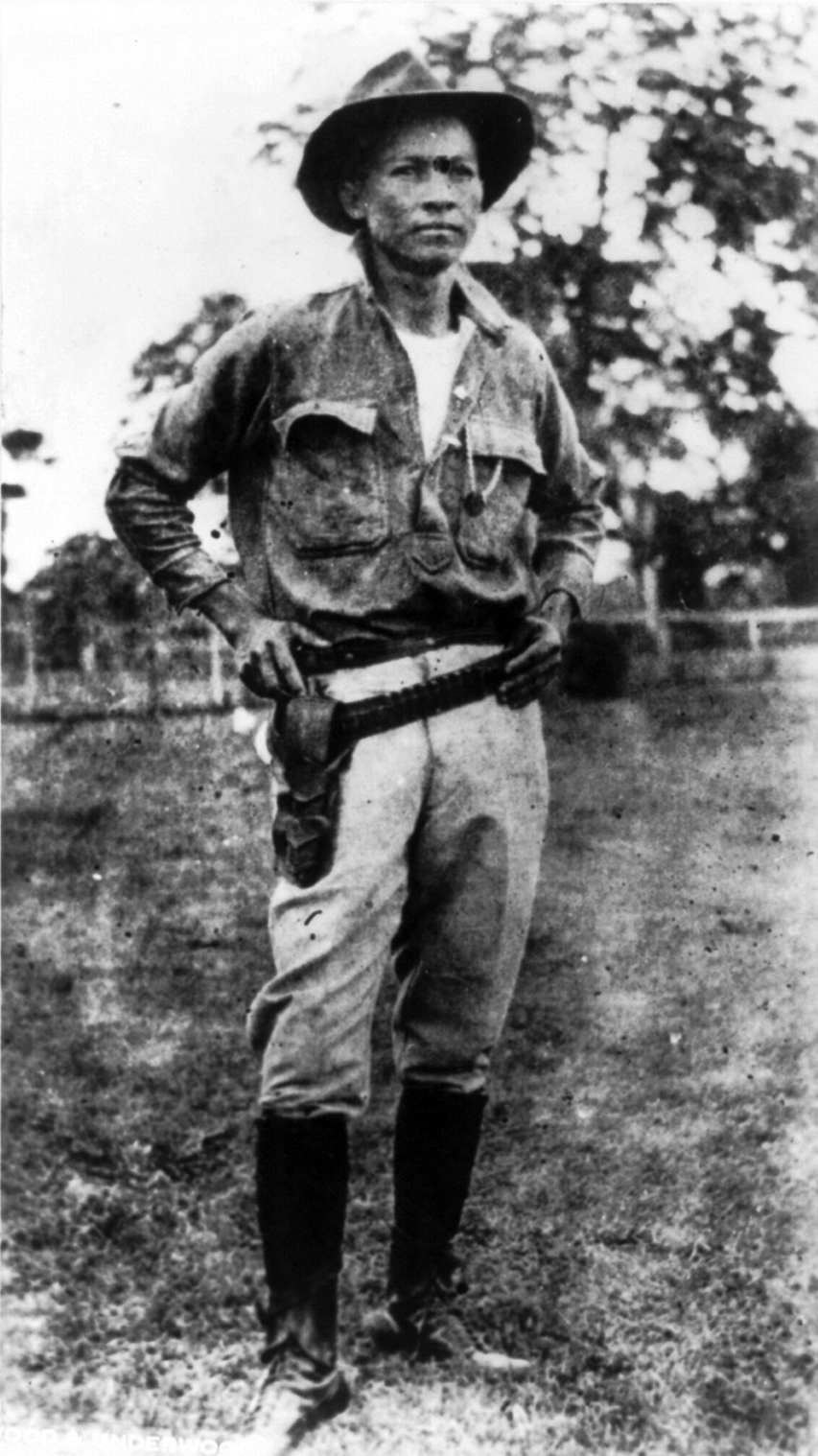
Augusto César Sandino (1895–1934) Jane Ivanov Sandanski (1872–1915)

Reading the biography of a certain historical character (Hristo Zarezankov / Христо Зарезанков) at a Macedonian web site, I was a bit intrigued by his being introduced as a "Macedonian revolutionary, Sandinista, and anarcho-socialist" (македонски револуционер, сандинист и анархосоцијалист). Considering the character's years of life (1890–1938), political inclinations, and, overall, his quite eventful life, one could certainly imagine Mr. Zarezankov sailing to Central America and joining the fighters of Augusto César Sandino - or maybe trying to follow the General's anti-imperialist ideas in the Balkans.

It turns out, however, that, in Macedonian at least, сандинист (Sandinist[a]) is not an uncommon typo for санданист (Sandanist[a]). (In English, of course, people are prone to misspell the other way around).

Like the Sandinistas, the Sandanists, too, were named after an assassinated charismatic leader, Jane Sandanski, fighting against the oppression by a great power (in his case, the Ottomans). I won't try to summarize here the complexities and controversies of his politics, but the career of the Pirinskiot Tsar ("The Czar of the Pirin") is a good illustration of the concept of "Balkanization". After Macedonia was liberated from the Turks in 1912 and divided by the liberator countries (who had to go to war between each other to accomplish the said division) in 1913, Sandanski was assassinated -- supposedly, with a tacit (covert) approval of the Bulgarian Czar Ferdinand, who then sent a wreath to his funeral.

2014-05-31

Hedgehog Eats Ploughwoman's Lunch

In an earlier post, we saw rather complicated relationships between hedgehogs and turtles (sometimes mediated by their crustacean mutual friends), as depicted in a few Bulgarian/Macedonian and Greek folk songs. The topic, however, is far from exhausted.

The following song, published in 1896 in Volume XIII, page 38, of the SbNU (the Folklore Collection), was collected in the Samokov area of western Bulgaria by D. Ikimov.

The subtitle “Хороводная” under the song's title means, basically, that you can dance to it.

Желва и ежъ Turtle and Hedgehog
Пошла желькьа на оранье, 
На оранье, на копанье;
Упрегнала два гушчера, 
Остен ѝ е льута змиiа.
Понела е башчи (?) ручoк: 
Пугачица и чорбица, 
Чурбицата од мушица.
На срешча ѝ ежо-кьежо,
Ежо-кьежо-тараежо, 
Наежил се, накежил се,
Пресресна си суа желькьа,
Пригѫрна ia, цальива ia,
Цальива ia, уапа ia;
Изруча ѝ погачица,
Погачица и чорбица.
Разльути се суа желькьа,
Та си оiде на кадиа,
На кадиу говореше:
-- Е кадио, ефендио!
Iа сам дошла да се судим,
Да се судим с ежо-кьежо.
Iа си поiдох на оранье,
На оранье, на копанье,
Та понесох башчу (?) ручок:
Погачица и чорбица.
На срешча ми ежо-кьежо,
Ежо-кьежо-тараежо,
Наежил се, накьежил се,
Пригѫрна ме, цальива ме,
Цальива ме, уапа ме;
Изеде ми погачица,
Искуса ми чорбицата.
 А кадия говореше: 
-- Таком Бога, суа желько,
Ти си мома -- дома седи,
Оно -- момче, така чини.
 Разсѫрди се суа  желькьа,
На кадиу говореше:
-- Е кадио, ефендио!
Криво седи, право суди,
Iали стани, iа да судим.
A turtle went to do ploughing,
To do ploughing, to do digging;
She harnessed two lizards,
And used a venomous snake for a goad.
She's brought a lunch for her father (?):
Pita bread and a chorba stew,
A chorba stew made from flies.
She's run across a hedgehog,
Hedgehog-shmedgehog!
He's bristled at her,
And blocked the prim (?) turtle's path.
He hugged her, kissed her,
Kissed her, bit her,
Ate her pita bread,
Her pita bread and chorba stew.
The prim turtle was angry,
She went to the qadi,
And said to the qadi:
-- "Oh Qadi Effendi!
I have come to sue,
To sue the hedgehog.
I went to do ploughing,
To do ploughing, to do digging,
I brought a lunch for my father (?):
Pita bread and chorba stew.
I met a hedgehog,
Hedgehog-shmedgehog,
He bristled at me,
Hugged me, kissed me,
Kissed me, bit me;
He ate my pita bread,
And devoured my chorba stew".
And the qadi said:
"The Lord be with you, prim turtle!
You are a girl - stay home;
He's a boy, he'll be doing things like that."
The prim turtle was angry,
She said to the qadi:
"Oh Qadi Effendi!
If you aren't sitting straight, at least judge right,
Or get up, and I will judge!"

(In accordance with the usual convention of referring to material published in the SbNU, the location of this song is usually abbreviated to "СбНУ XIII, 38". It can also be found, with a somewhat modernized spelling, as Song No. 39 in the book "КНИГА НА НАРОДНАТА ЛИРИКА, От седенките и хората до семейните радости и неволи", eds. Божан Ангелов и Христо Вакарелски).

Notes:

  • "суа" may be a dialectal variant of "суха" ("dry"), or at least some editions think so; for the lack of a better guess, I translate that as "prim".
  • A qadi was a judge in an Ottoman (Islamic) court, and Effendi (Sir) was a way to address learned officials like that. At the time the song was recorded, Bulgaria has been liberated from the Ottoman rule for less than 20 years (and Macedonia was still under the Ottomans), so no wonder the folk songs still had Ottoman era terms in them.
  • The Turtle in the song is pretty good at declining her nouns: "кадио, ефендио!" is the Vocative (which is still very much alive and well in Bulgarian and Macedonian), and "кадиу" has to be the Dative (which is on its way out).
  • "Криво седи, право суди" (literally, something like "sit not straight; judge right") is actually a Bulgarian (and Macedonian) proverb, which is still in active use (at least judging by the online media). It is listed in plenty of dictionaries as an examlpe, but none of them quite explains its meaning, which appears to be along the lines, "You ought to make a right judgment in a disinterested way, not affected by your personal position". I am sure at all that I am guessing its sense right (or the meaning of the Turtle's "extension" of it). The most usual Bulgarian form of this prover is "Криво да седим, право да съдим," but there are many variants.

A different version of this song is given in the book "ЦУТ ЦУТИЛА ЧЕРЕШВИЦА. МАКЕДОНСКИ НАРОДНИ ПЕСНИ ОД МАРИОВО" (Macedonian folk songs from Mariovo) by БОЖО СТЕФАНОВСКИ (Božo Stefanovski), published by Bigoss in Skopje, 1995.

Кинисала мома желка The Girl Turtle goes out
Кинисала мома желка
во сабота на работа,
при орачо, при копачо.
Ми кренала зелен зелник,
зелен зелник коприварник.
На пат срете лоша среќа,
лоша среќа момче еже,
што потскокна па ја бакна,
што подрипна и ја штипна.
Ми тргнала на судија,
на судија, при кадија:
-Слушај ваму ти судија,
ти судија, ти кадија,
криво седи, право суди,
си кинисав на работа,
на работа во сабота,
при орачо при копачо,
што ме срете момче еже,
што потскокна та ме бакна,
што подрипна та ме штипна!
-Ај од тука, мома желко,
така прават ергените!
A girl turtle
Went to work on Saturday,
To do ploughing and digging.
She brought a green pie,
A green nettle pie.
On her way, she had an unfortunate meeting:
She met a boy hedgehog,
Who jumped and kissed her,
Who lept and pinched her.
She went to a judge,
To a qadi judge:
"Listen, Your Honor,
You Qadi Judge!
You may not sit straight, but judge right!
I went to work,
Went to work on Saturday,
To do ploughing and digging,
Where I met a boy hedgehog,
Who jumped and kissed me,
Who lept and pinched me."
"Go away, girl turtle!
This is what boys do!"

A somewhat different (bowdlerized?) version of the same song recently appeared in a 5th grade Macedonian language textbook:

Кинисала мома желка The Girl Turtle goes out
Кинисала мома желка
да ми оди на орање
да ми оди на орање
да ми носи сладок ручек.
Ја пресретна еже момче
тој ја бутна, ја подбутна
и истури сладок ручек
сладок ручек топеница.
Се налути желка мома
ми отиде кај судија.
Ој судијо, ти кадија
криво седи, право суди.
Јас си одев на орање
и си носев сладок ручек,
ме пресретна еже момче
тој ме бутна, ме побутна,
ми истури сладок ручек
топеница, маштеница.
Што и вели судијата,
што и вели кадијата:
Тој е момче се задева,
ти си мома, седи дома.
A girl turtle went out,
To go to do ploughing,
Carrying a tasty lunch with her.
A boy hedgehog blocked her way,
Pushed her, 
And grabbed the tasty lunch,
Tasty lunch of Topenitsa.
The girl turtle was angry
And went to the judge.
"Oh  Qadi Judge,
Whether you are sitting straight or not, make a right judgment!
I was walking to do ploughing,
Carrying a tasty lunch with me;
A boy hedghog blocked my way,
He pushed me,
And took my tasty lunch,
Of Topenitsa and yogurt."
What did the judge tell her,
What did the qadi tell her?
"He's a boy, he'll tease people.
You're a girl, stay home."

Notes:

  • The name topenitsa (топеница) appears to be applied to various dishes in different places. The Macedonian Wikipedia explains that it's a flour product, a bit like pita chips; but Bulgarian recipes for topenitsa describe some kind of a yogurt, cottage cheese and hot pepper spread.

As reported by a Macedonian blogger, this folk song recently appeared in a 5th grade Macedonian language textbook. Besides "philological" questions (about the meaning of certain rare words) students were asked whether they think the judge's decision was right, and how they would try the case. This all (together with some other texts in the same book) made the blogger suspicious of sexist ("misogynist") inclinations of the textbook authors. I guess the Samokov version of the song, which ends with the Turtle's retort to the Judge's "Boys will be boys" pronouncement would have been less objectionable to that modern readers' sensibilities.

P.S. Here's an audio recording of one version of this song performed by the duet of Jonče Hristovski and Trpe Čerepovski (Јонче Христовски, Трпе Череповски) on Youtube.

2014-02-25

Igroörets

When reading (or trying to read) a Macedonian book, I encountered a cool looking word, игроорец (igroorets; in the New Yorker's orthography, that could be transcribed igroörets). Looking it up in the dictionary, I saw that its meaning was just what I'd expected from the context, "Тој што добро игра во оро", i.e. "one who is good at dancing horo [a Balkan folk dance]". The word also exists in the Bulgarian spelling, игрохорец. (Macedonian frequently drops the h found at the beginning of Bulgarian words and word roots).
A web search confirmed that it's a real word, in fairly active use. Among the top search results was a 2008 article from the (now defunct) Macedonian Service of the BBC, Најстариот игроорец во Македонија (The oldest horo dancer in Macedonia), about one Dimitar Stanoevski (Димитар Станоевски) from the village called Dramche Delchevo (Драмче Делчево). At the time of writing, Dedo Dimitriya (Granddad Dimitar) said that he was 94 by his own account, even if other people said he was only 92. He had first organized a horo troupe in 1951, performing at numerous festivals in Yugoslavia and abroad, and taught many horo dancers over his career; at the time of the publication, his troupe only included 6 people.
In 1984, he had one of his kidneys transplanted to his daughter. He attributes his longevity to the clean air and milk of his village.
The article also taught me another cool word, ороводец (orovodets), "one who leads the horo", which can also be used figuratively.

2010-09-30

St George: the horse, the dragon, and a teapot-wielding assistant

Who does not know what the traditional iconographic image of St George look like? A horse, a spear, a dragon. And... a small fellow with a teapot (or something like that). At least at this particular painting in Sozopol, Bulgaria - and I think I've seen the teapot guy elsewhere as well. Any ideas? The teapots (or pitchers of similar kind, if you wish) are of some importance in some Islamic cultures: e.g., you can see them outside of many Muslim restaurants in China (for hand-washing), or - in great abundance - in some Chinese mosque's "ablution blocks". But I doubt there is any connection here... Some Russian folk tales, I think, mention the character using some kind of magic water when fighting Zmey Gorynych (a multi-headed dragon of sorts) to prevent the creature from growing new heads to replace the ones he's lost. But I doubt this is relevant here either.
P.S. Thanks to Wikipedia user Cam, here's an article that devotes several pages to the discussion of exactly this motif: Suzanne Macalister, "From the hero with a thousand names to Perseus, Bellerophon, Demetrius, George -- as Media", published in the ''Journal of the Hellenic Diaspora''. According to her, there is no official explanation (i.e., an inscription on the icons themselves, or a discussion in canonical literature). The most common word-of-mouth explanation is that the boy is a person rescued by the saint from the Turks (or, with an earlier Byzantine reference, from the Bulgarians, with whom the Byzantines often fought). The "teapot" becomes a winecup in one iconographic version, where the boy captured by Turks had been serving a cup of wine to his master at the moment when St George responded to the boy's mother's prayer and miraculously rescued the captive. In another version it is not a boy but a princess, who got a ride with St George to get water from a well that had been invaded by the dragon (whom the saint was to slay). folk legend. Yet another legend, from Crete, says that the small person worked at a coffee shop, where the saint was drinking coffee at the time when the message came that the dragon was located and needs to be slain; ever-helpful, the coffee guy accompanied his customer to the battle, with the coffee pot ready for action. There are other versions as well.